Bitcoin Draws 2022 Comparisons as Fed Signals Rate Hikes
Analysts see echoes of Bitcoin's 2022 downturn as the Federal Reserve moves toward resuming interest rate increases.
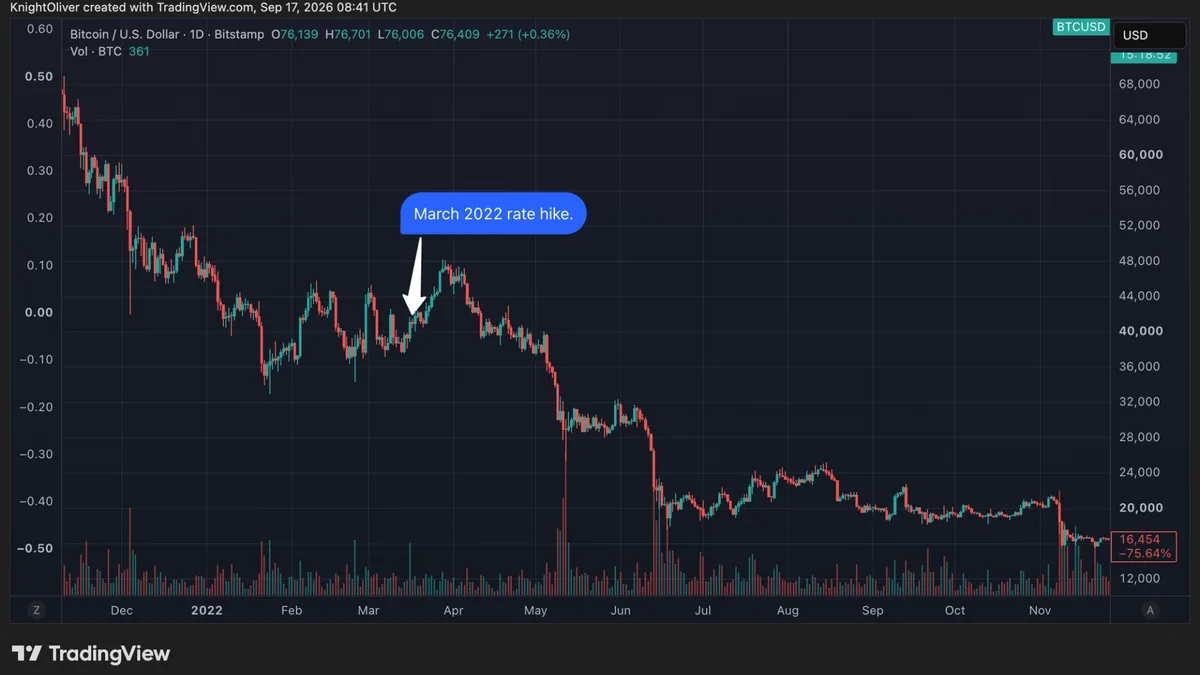
Bitcoin is drawing comparisons to its bruising 2022 performance as the Federal Reserve signals a return to raising interest rates, a monetary policy shift that historically weighs on risk assets including cryptocurrencies.
The parallel is notable: in 2022, aggressive Fed tightening helped drive Bitcoin from near all-time highs to multi-year lows, erasing trillions in crypto market value as investors retreated from speculative positions. Analysts tracking the current rate environment see structural similarities that could again pressure the leading digital asset.
Read more SEC Greenlights Innovation Exemption for Tokenized Stocks →
Rising interest rates tend to reduce the appeal of non-yielding assets like Bitcoin by making safer, interest-bearing instruments more competitive. The prospect of a prolonged higher-rate environment also tightens broader financial conditions, curbing the liquidity that has historically fueled crypto rallies.
Whether Bitcoin can decouple from that dynamic remains an open question. Proponents argue the asset has matured significantly since 2022, with spot ETF approvals and greater institutional participation providing structural support that did not exist during the prior downturn. Critics counter that macro sensitivity has only deepened as institutional money has flowed in, making Bitcoin more — not less — correlated with traditional risk markets.
Continue reading at CoinDesk.